


Going Beyond the Translations
How Culture and Thought Shape the Meaning of Scripture
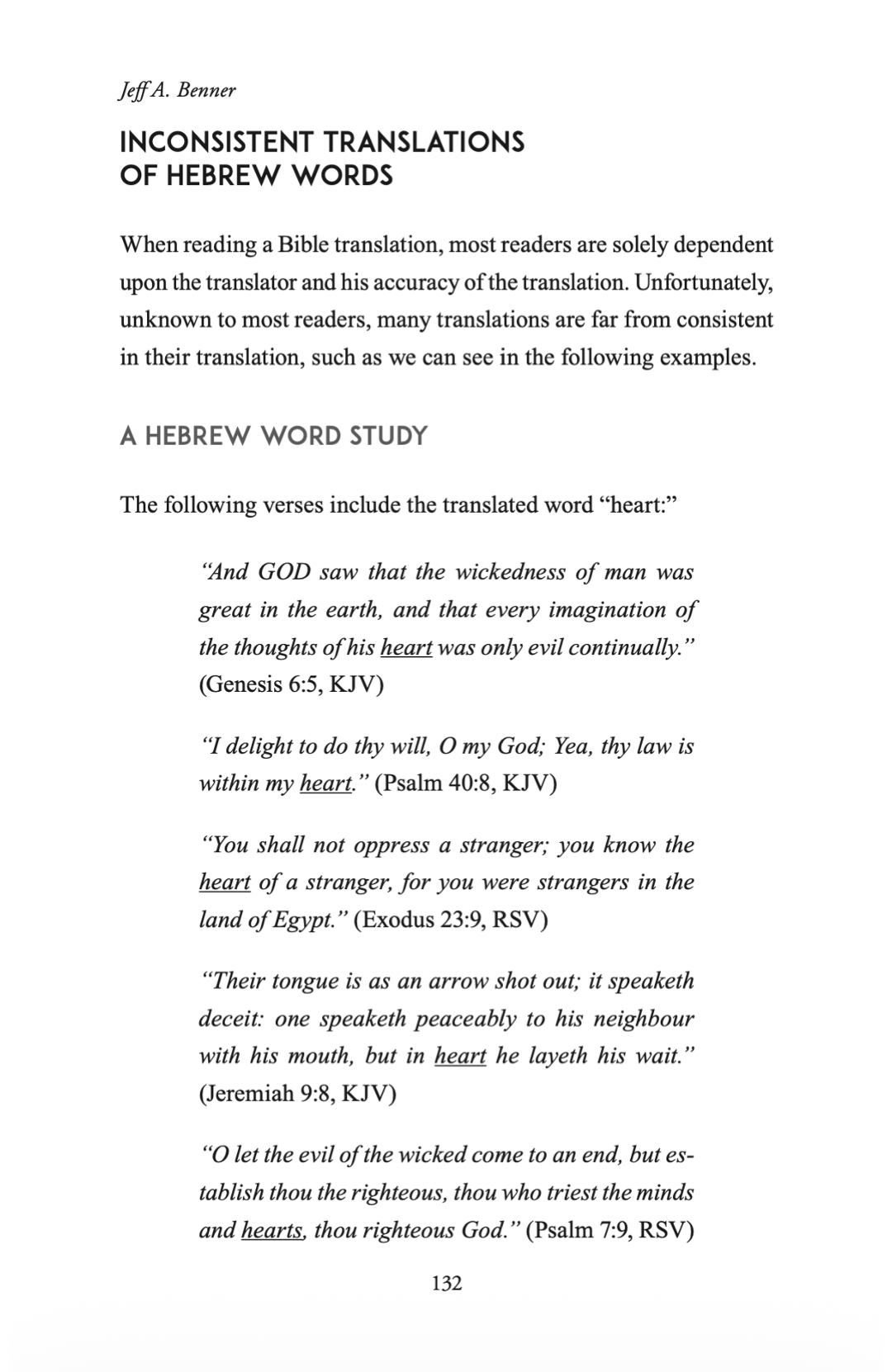
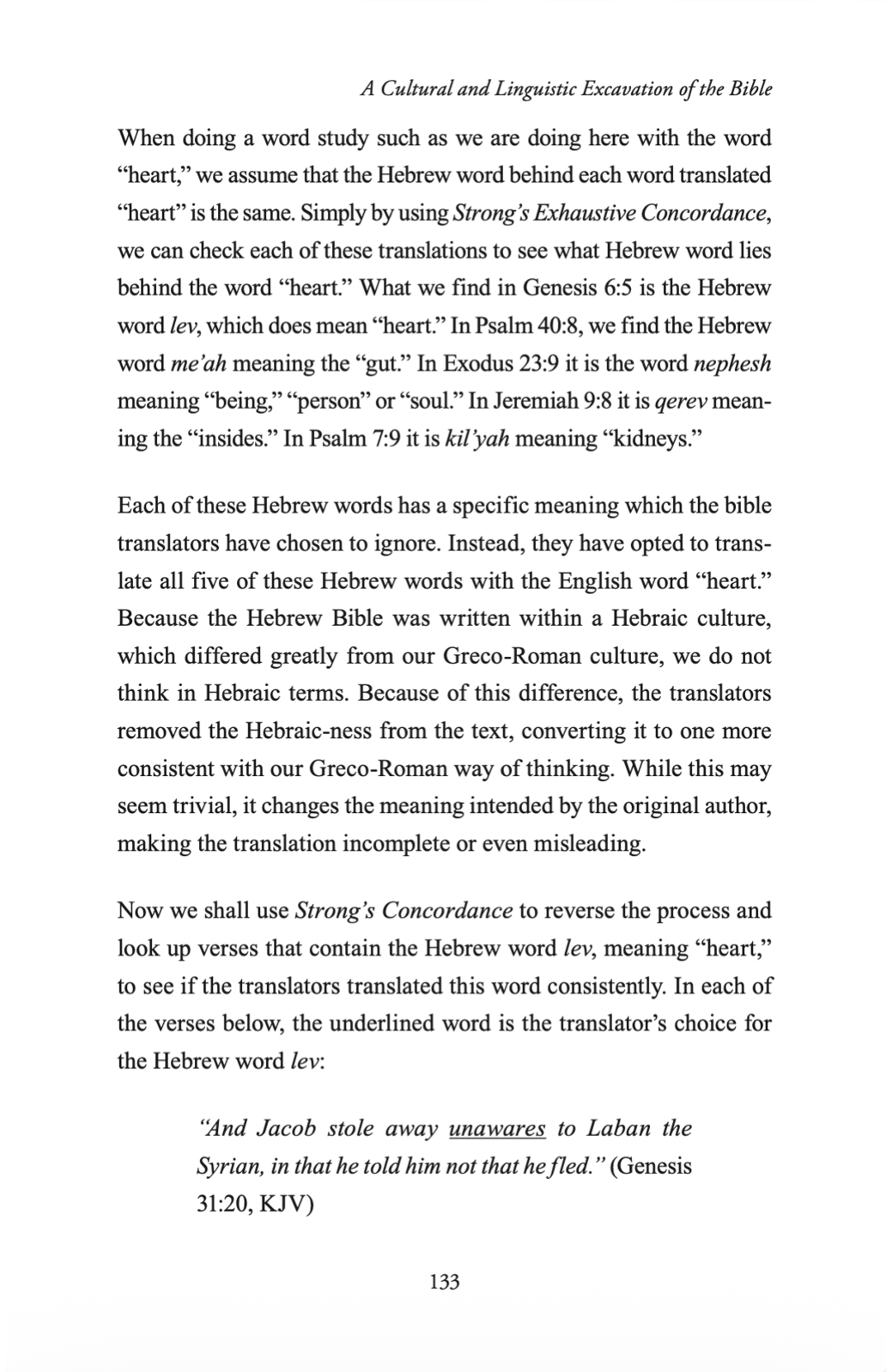
Bible translators will often ignore the grammar and vocabulary of the original language in preference to something that is more complimentary to the way you think. For instance, would it surprise you to learn that they have translated the Hebrew words nephesh, meaning "soul," and kil'yah, meaning "kidneys," with the word "heart?" If you would like to learn more, read on.
…every imagination of the thoughts of his heart… (Genesis 6:5, KJV)
Do you notice anything “odd” in this phrase? This, and other similar verses, helped me to understand that the people of the Bible think, no pun intended, differently than we do. While we associate the “heart” with emotion, the Hebrew people associated it with thought.
Let’s take a look at this phrase from my translation, Benner’s Mechanical Translation of the Torah.

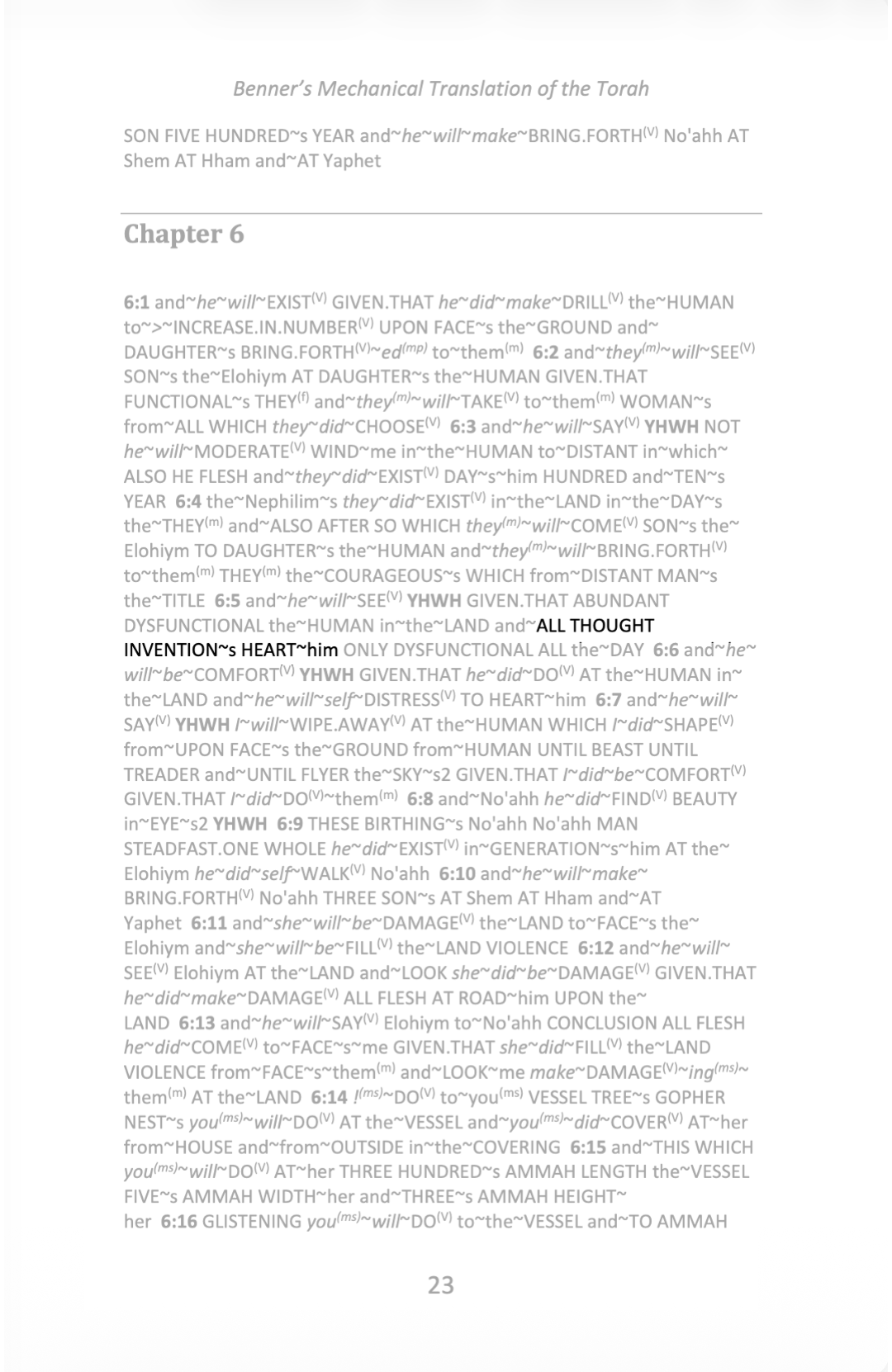
This translation is designed to allow the reader to view the original Hebrew of the Bible through the English language. Every word, prefix and suffix are translated exactly the same way every time and the text is in the same order as it appears in the Hebrew.
Because this translation can be difficult to read, I also have my revised translation, Benner’s Translation of the Torah, which transforms the mechanical translation into something readable and understandable to the average English reader. Here is my translation for this phrase.

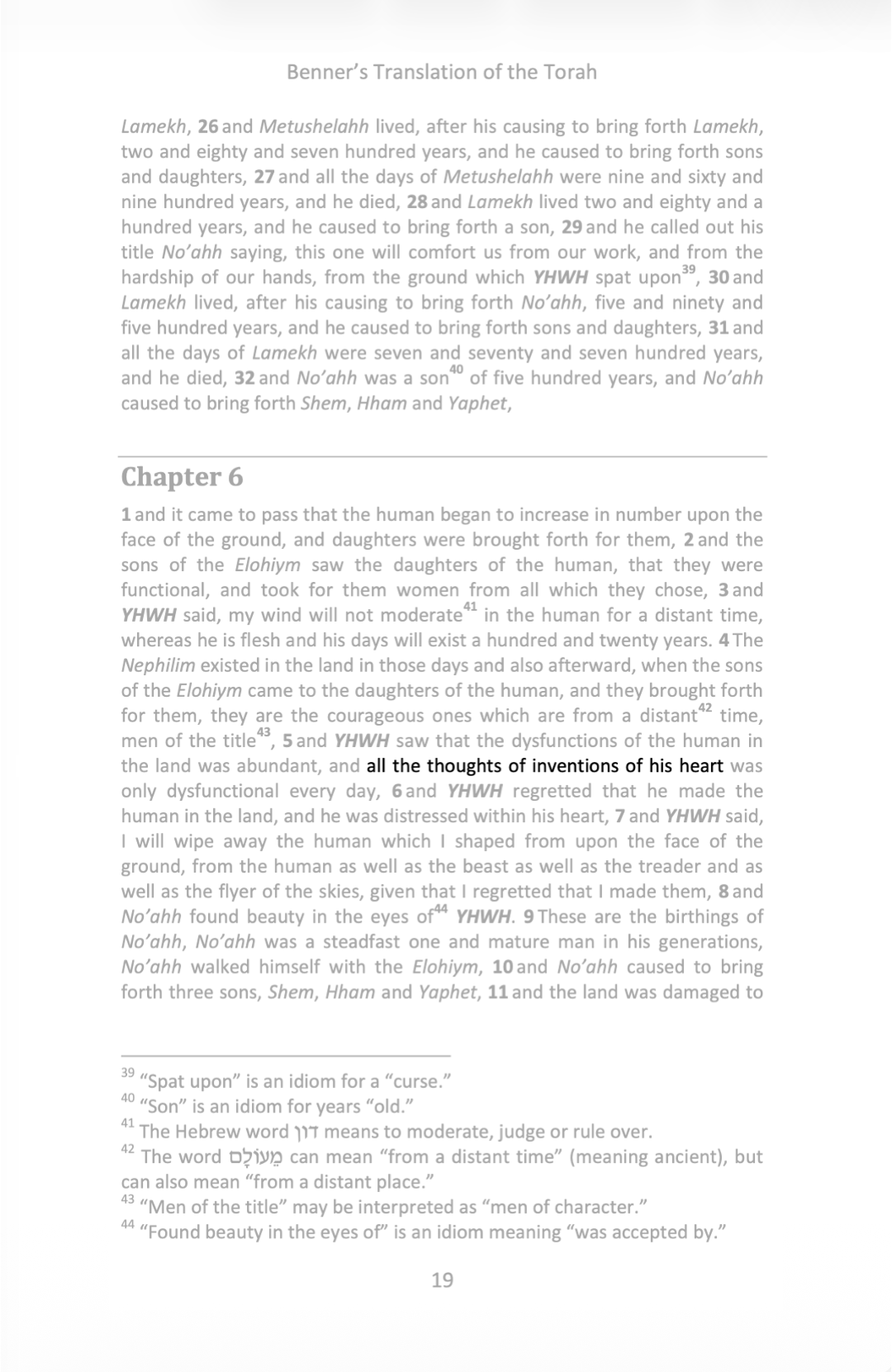
Next, let’s take a look at the word “heart” and how it is defined in my lexicon, Benner’s Lexicon of Biblical Hebrew.

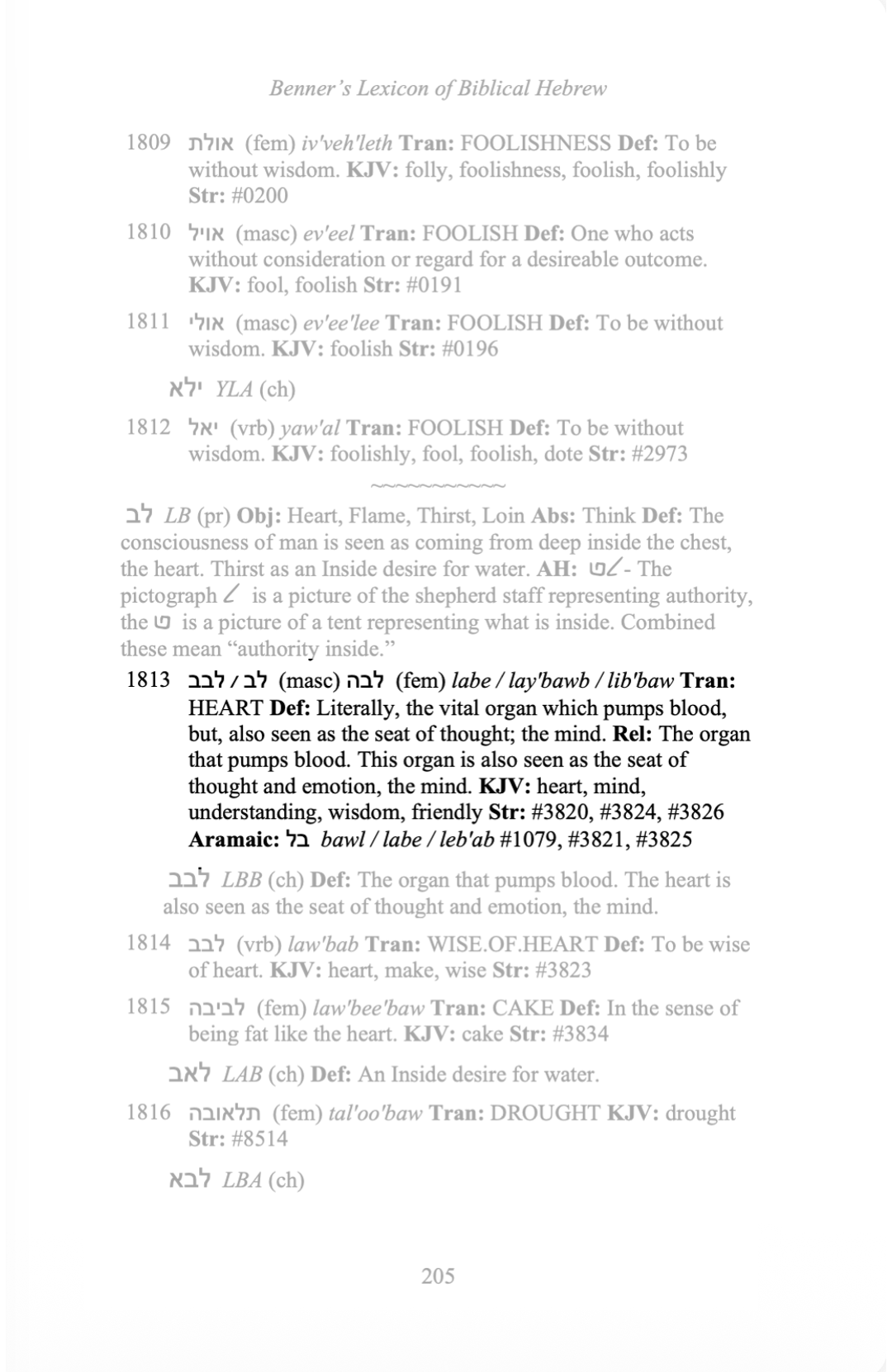
Note that the Hebrew word for “heart” is לב (lev) and in most cases, this Hebrew word is translated as "heart." However, this is not always the case and the following passage will demonstrate the need to examine the original language behind any translation.
…ye know the heart of a stranger… (Exodus 23:9, KJV)
Here is this phrase in my translations.


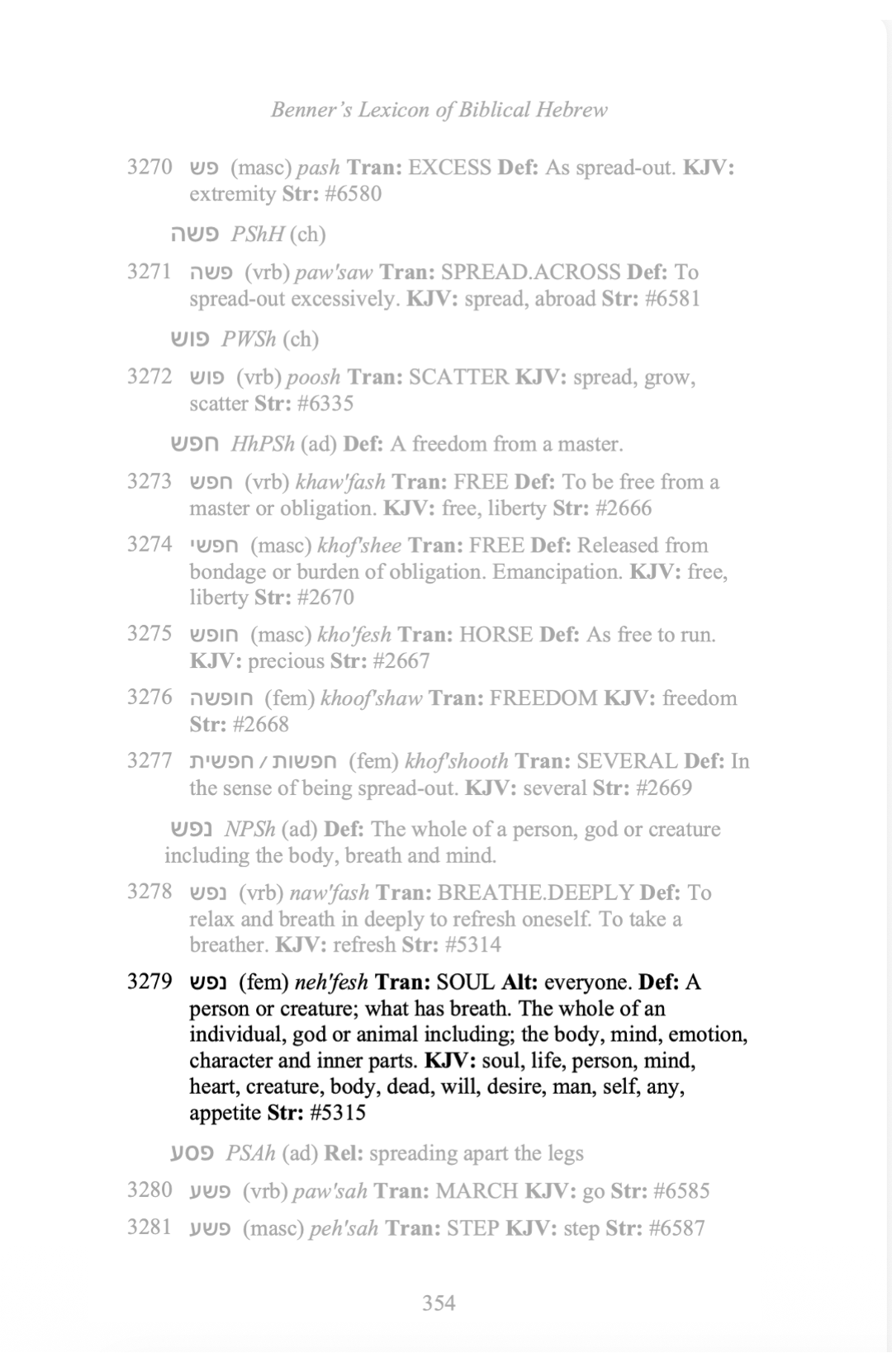
While the English translation uses the word “heart,” we can see through this translation that it is not the Hebrew word לב (lev), but the word נפש (nephesh).
Here is the entry for this Hebrew word in my lexicon.
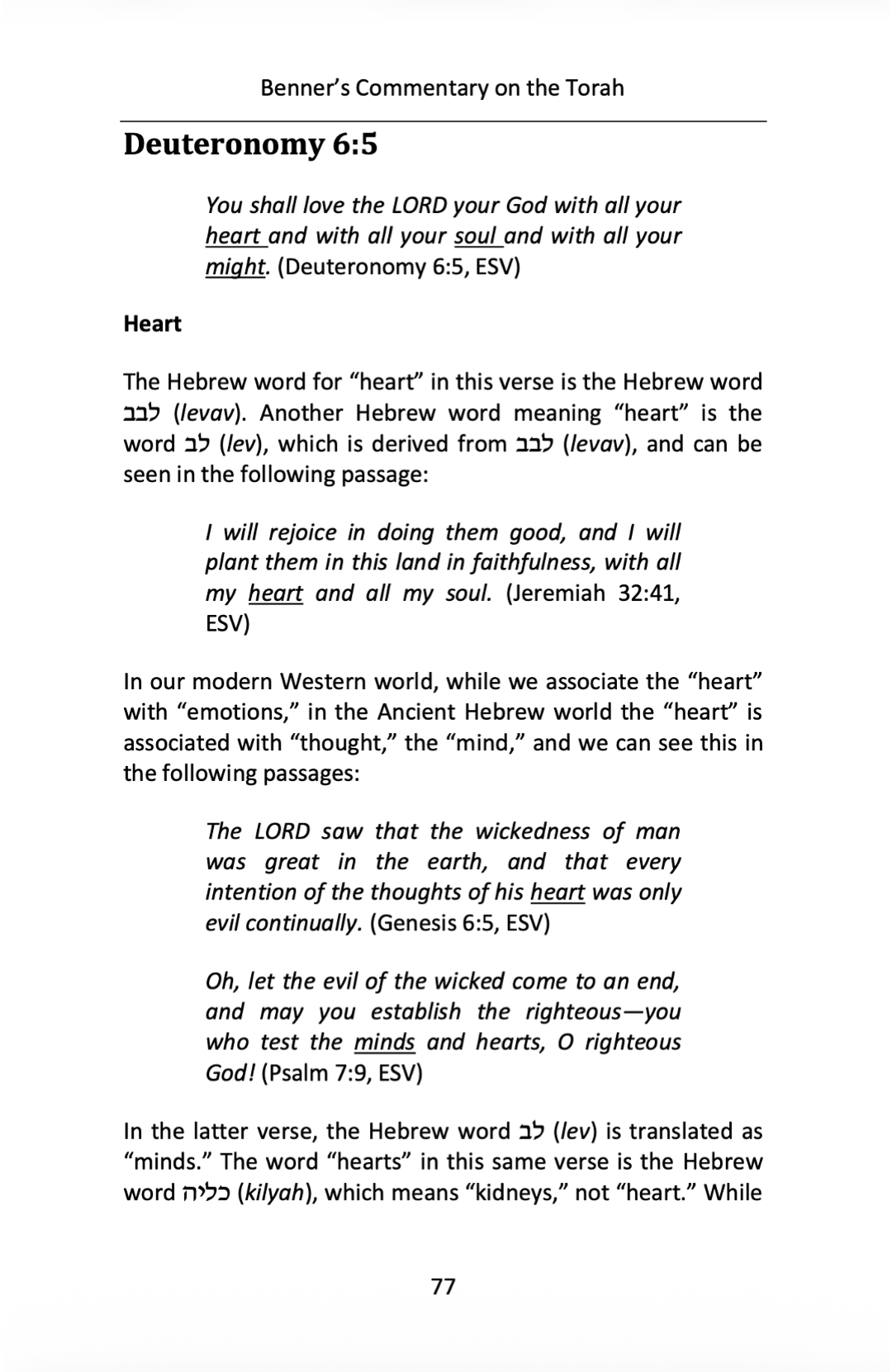
In order to truly understand the Hebrew words lev (heart) and nephesh (soul), both of which appear in Deuteronomy 6:5, let me share with you an excerpt from my book, Benner’s Commentary on the Torah.

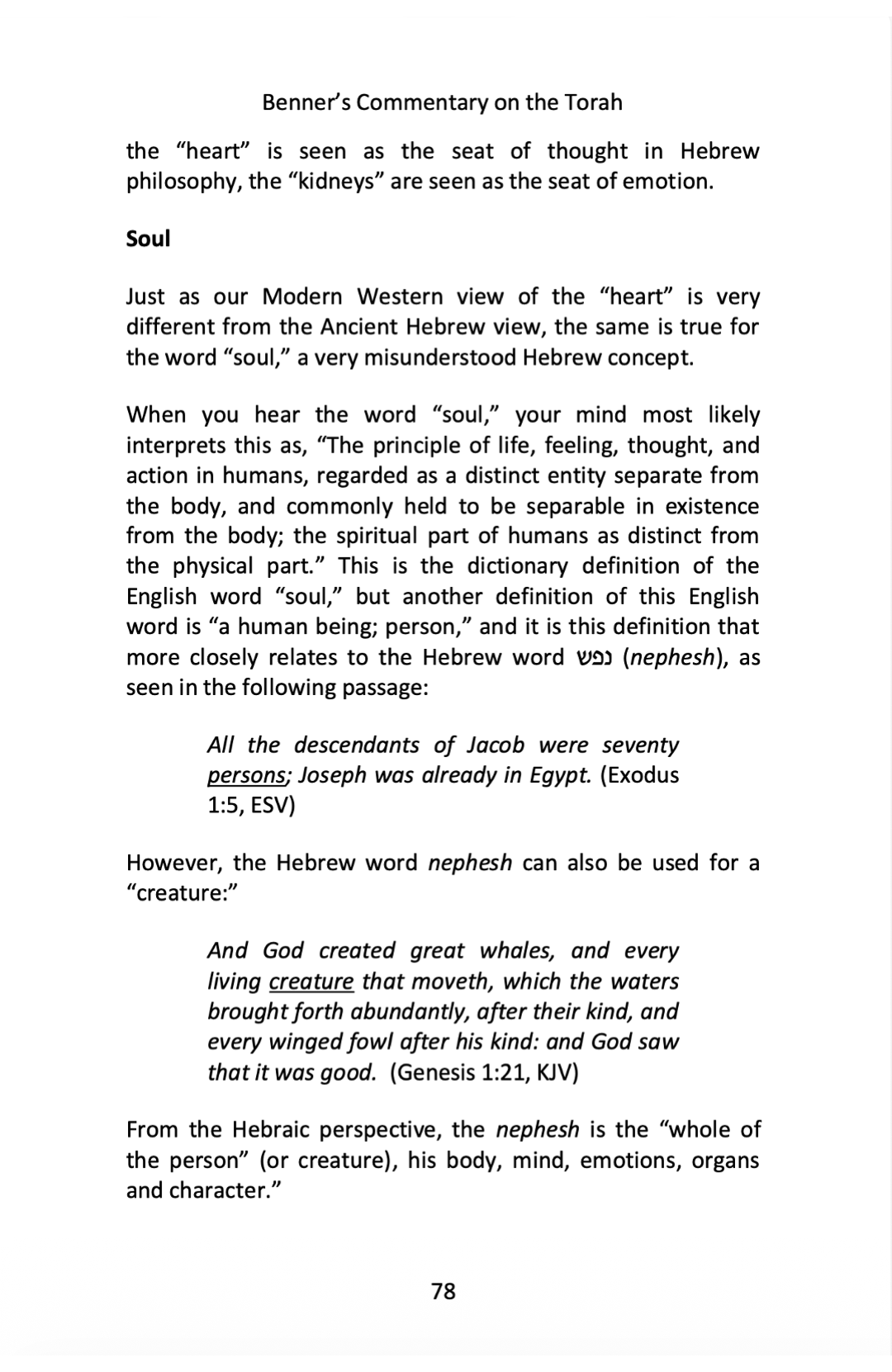
Let’s take a look at another verse using the word “heart.”
…test my heart and my mind. (Psalm 26:2, ESV)
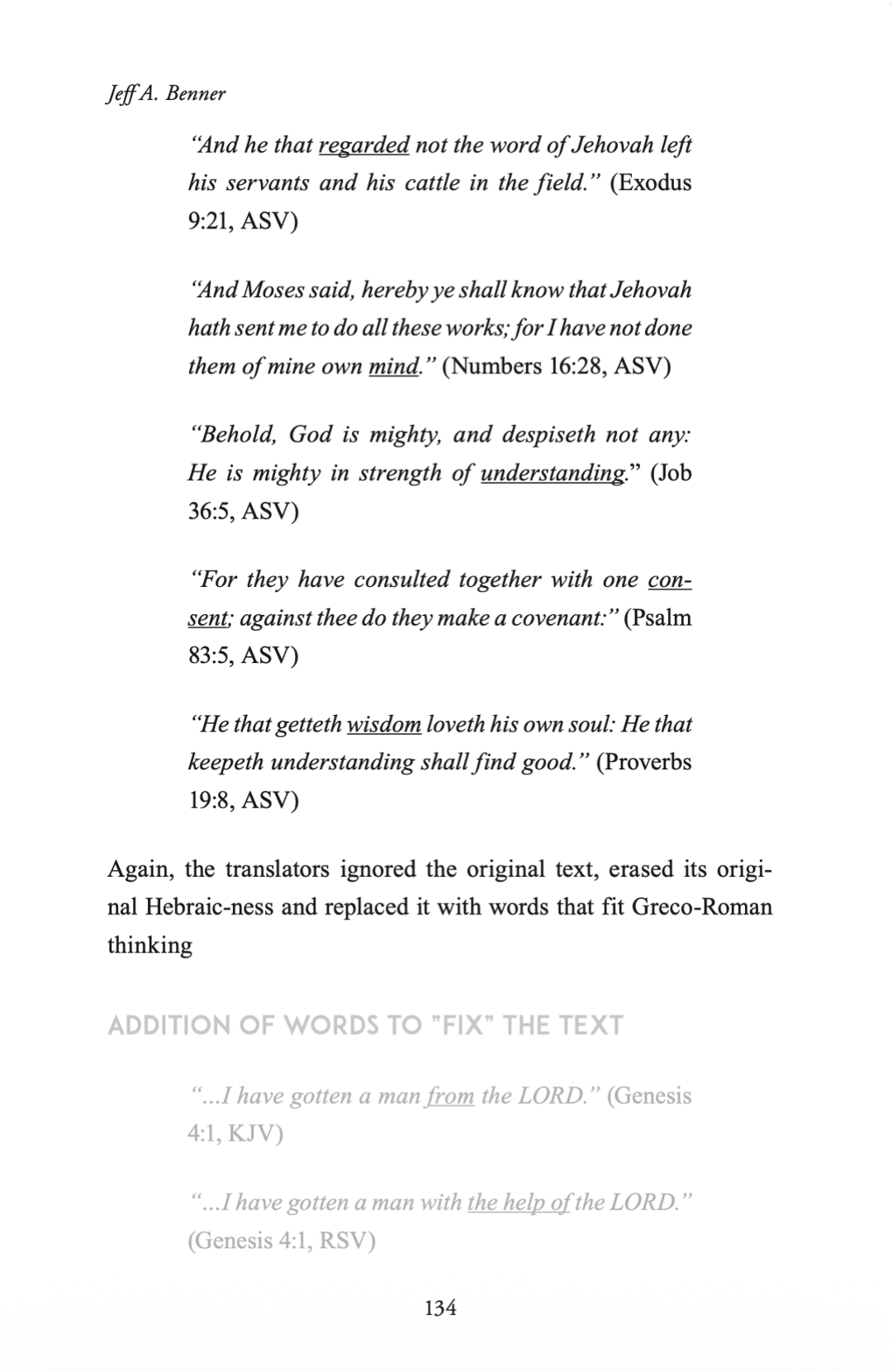
If the heart is, as I have postulated, the mind, why do we see the "mind" alongside the word “heart”? The answer is found by examining the underlying Hebrew and how translators handled it. In this verse, the translator chose to render the Hebrew word kil’yah (literally “kidneys”) as “heart,” and the word lev (“heart”) as “mind.” This is a case of the translators fixing the text for the reader. Recognizing that we do not use the word “kidneys” in this context in English, they replaced it with something more acceptable, but in doing so they obscured the author’s original intent.
As it turns out, it is the kidney’s that are the seat of emotion in Hebrew thought, just as the Christian Standard Bible shows in its translation of Psalm 7:9.
…examines the thoughts (lev/heart) and emotions (kil’yah/kidney)…
Below is my study on the word “heart” from my book, A Cultural and Linguistic Excavation of the Bible.